Points of Interest

Matt Hazard: Blood Bath and Beyond!

hazardland_japan

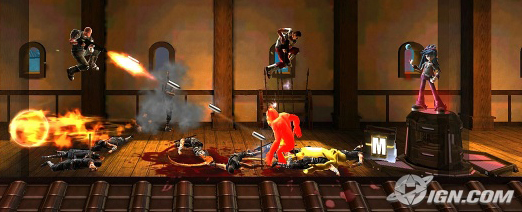
The image above (taken from IGN) is from the last project I worked on at VCS, which came out today on Xbox Live Arcade. Matt Hazard: Blood Bath and Beyond is a 2D side-scrolling shooter that parodies various video games. (Note the Pokemon inspired characters in the screenshot. 😉 ) It’s also a spin-off from the Eat Lead game that came out about a year ago.

BBB was my most favorite project I worked on at Vicious, and I’m proud to have been a part of it.

Points of Interest

GDC 2009

gdc-logo1

I’ve been traveling all over the place this past month, but I’ve finally compiled some notes from one of my trips: the Game Developers’ Conference 2009! I went with my company to help run the recruiting booth and attend classes there, and it was a blast. The following are impressions of the lectures I’ve attended along with a link to my .doc file with all my typed notes. I tried to include links to the slide or videos whenever available. Hope you find them useful!

Overall, I had a great time and learned tons at GDC. The last time I attended GDC was as a student volunteer, trying to break into the industry. It’s eye-opening on how different it is from the other side of the coin. 😉

Download: GDC 2009 Lecture Notes (Word .doc format)

Media Molecule: ‘Winging It’ – Ups, Downs, Mistakes, Successes in the Making of LITTLEBIGPLANET


I was very excited for this lecture because I am a huge fan of LittleBigPlanet and really admired everything about Media Molecule’s game from physics, art direction, to a very open game design aesthetic. I was under the impression this session was going to be a post-mortem of their title, along with explanations of their process of conceiving such a creative art/design direction with a small staff. Empowering players to create their own levels and share them sounded like a hefty task from a design perspective since you can’t always predict your user base’s actions. The speakers, technical director, Alex Evans and creative director, Mark Healey, are brilliant for their work on LittleBigPlanet, but I felt that the whole session was delivered impromptu. Perhaps the other LittleBigPlanet sessions were better since they were more focused on one particular aspect of the game.

Modular Procedural Rigging


This talk, led by David Hunt, discussed the rigging tools and techniques used for Bungie’s Halo games. Wow, talk about an overwhelming amount of information! There were so many fantastic ideas on how to wrangle the animation assets of a large scale project, in addition to various techniques used for scripting rig components. I really wished this session was 5x longer so we can go into greater detail on how the Bungie TD team developed these animation tools. I’m not well-versed in scripting and creating custom tools, but going to this session makes me want to learn more. The slides (which are linked in my .doc file) are definitely worth a read if you want to learn more about their process.

Self-Limiting Rigging Methodology Used on GOD OF WAR


It was interesting comparing the “Modular Procedural Rigging” session to the “Self-Limiting Rigging Methodology” session because both studios tackled AAA projects with different perspectives. While the MPR lecture advocated having a rigging toolbox that animators can customize to better suit their animation needs, the technical artists of the GOW team (which were a really small team compared to Bungie’s) tried to standardize one rig to cover a vast variety of bipedal characters. The methodologies were almost counter to the previous lecture. It was neat to see the differences, and it shows that there’s never one ‘right’ way to solve a problem. Unfortunately, I don’t have any notes for this lecture in my .doc file, primarily because the lecture went by so quickly. If anyone can find their slides, I would greatly appreciate it!

Solid Game Design: Making the Impossible Possible – Hideo Kojima Keynote


Hideo Kojima + very entertaining slides + simple, yet insightful design explanations for Metal Gear Solid series = AMAZING presentation. I highly suggest watching the presentation for yourself on Gametrailers.com. I have the link on my .doc file.

Cinematic Next-Generation Action NARUTO: Ultimate Ninja STORM – In-Game Artwork and Beyond


One of the ties for favorite lectures at the GDC, the presentation for the PS3’s Naruto title delivered everything I wanted to learn about the art pipeline and process. I’m not sure if I can find the slides for these since the speaker, CEO/Representative Director, Hiroshi Matsuyama, requested that no pictures be taken during the presentation (unless you were press). There was a chock full of information for how Cyber Connect 2 achieved the anime look of Naruto and ensured that it lived up to its license’s visual style. I loved how their solutions for emphasizing the stylized art direction were very practical. I took a lot of notes for this lecture in my .doc file, so enjoy!

Cinematic Game Design III: Action!


The last lecture I attended was the “Cinematic Game Design III: Action!” where the speakers, Lead Single Player Designer of Kaos Studios, Richard Rouse III, and Cinematic Director of Big Huge Games, Marty Stoltz, described various cinematic techniques from movies developers can use to heighten the action for their titles. It was very well presented; they would first give a film example illustrating the technique and then a game title that successfully achieves the desired effect. Check out the link in my .doc for their slides.
Animation · Points of Interest

Eat Lead!


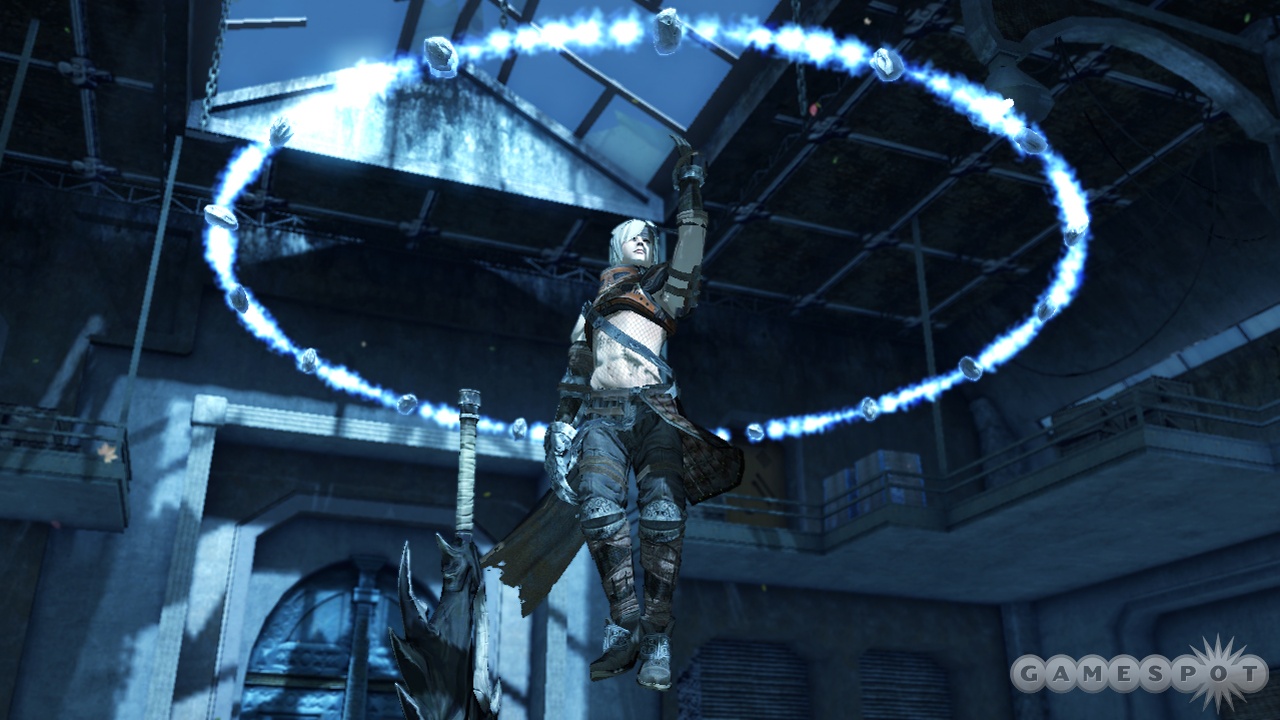
(Screenshot taken from Gamespot).

Now that we’re mostly wrapped up on my company’s project: Eat Lead: The Return of Matt Hazard, our publisher has been sending out gameplay videos and screenshots to the press.

One of the videos released is one of the bosses I’ve worked on in the project, Altos Stratus. I’m a humongous Final Fantasy nut, so working on a villain that spoofs Japanese style RPG’s was a real treat for me.

Our project’s viral marketing campaign (complete with terrible graphics and fake bloggers) and voice talent were incredible. I’m very lucky to have been part of such a unique and interesting title.

Be on the look out. The 360/PS3 game hits store shelves in the spring!

Points of Interest

United Olympics Commercials

One of five United Airlines commercials
Two Worlds: One of five United Airlines commercials

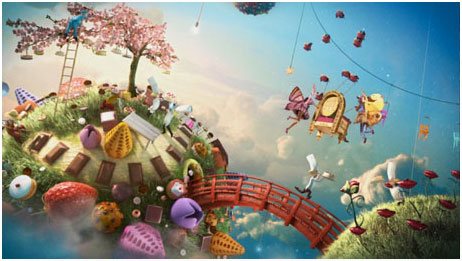
While the Olympics are an exciting and inspirational thing to watch, I am absolutely pleased with the commercials’ offerings in-between. Last night, I caught one of the five United Airlines commercials airing during the Olympics. From paper cut-out and CG, to salt on glass, the art direction for each commercial is imaginative, refreshing, and simply gorgeous. These commercials were produced by BDM, an ad agency based in Minneapolis. Each of these commercials features Gershwin’s “Rhapsody in Blue”, United’s personal theme.

I was able to find Youtube versions of each, but you should definitely check out the hi-res versions either on their website or via the links provided.

(All descriptions below are taken from the United Airlines’ Press Release.)

Sea Orchestra


“Sea Orchestra” (60 seconds) – “Sea Orchestra” is a lively and visually rich commercial that introduces United’s new international first and business class cabins. In it, a United airplane crosses the ocean and is serenaded by an orchestra of animated sea creatures that are playing a unique version of Rhapsody in Blue using tubas, violins, French horns and the Indonesian gamelan. The score was created by Shy the Sun, a South Africa-based directing team, which used hand-drawn textures, computer animation characters and photographs of water, reefs and skies.

Two Worlds


“Two Worlds” (60 seconds) – “Two Worlds” is a celebration of color and beautiful images that portrays United’s effect on international travelers. In it, a weary business traveler leaves a mundane, monotonous black and white world and enters a fantasy of color, representing United’s new international first and business class service. When he lands, he is once again in a black and white world, but has brought a bit of the magic of the new United experience with him. The commercial combines two different and distinctive animation styles created by directors SSSR, a Norwegian and Japanese team, who was responsible for the monochromatic world that was mostly computer-generated with a hand-crafted feel, and Gaelle Denis, a French director, who was responsible for the colorful fantasy world that uses using live action, computer generation and matte paintings, including textures such as Japanese rice paper.

Heart


“Heart” (60-seconds) – “Heart,” United’s new brand ad, portrays the connection between a husband and wife and United’s role in reuniting them. The commercial depicts a woman leaving her husband to fly to Europe for a business presentation. As she says goodbye, she leaves her heart behind as a symbol of her love. The musical score for “Heart” is a piano duet of Rhapsody in Blue performed by Herbie Hancock and Lang Lang, who recently performed Rhapsody in Blue together at the 2007 Grammy Awards. Using stop-motion animation and paper puppetry, California-based director Jamie Caliri and his team, place dimensional cardboard puppets in miniature sets that were shot frame by frame.

Butterfly


“Butterfly” (30 seconds) – “Butterfly” is a fluid, animated commercial with an artistic interpretation of flying in United’s new international first and business class cabins. The spot focuses on United’s 180-degree flat-bed business class seats and comes to life against a violin version of George Gershwin’s Rhapsody in Blue. In this spot, the Polish director Aleksandra Korejwo manipulated colored salt using shed condor bird feathers on a black canvas positioned under a downward-facing camera.

Moondust


“Moondust” (60 seconds and 30 second) – “Moondust” is a luminous, dreamlike commercial with an artistic interpretation of flying in United’s new international first and business class cabins. The spot focuses on United’s 180-degree, flat-bed business class seats and is animated to a spare, intimate interpretation of George Gershwin’s Rhapsody in Blue. Ishu Patel, an Indian-born and Canadian-based animator, used his world-renowned back-lit technique in which a thin layer of plastic modeling clay is applied to a glass plate that has a 1000-watt light positioned beneath it and an animation camera above it.

Points of Interest

It is normal.


I have an incredibly hard time finding professional advice pertaining to the industry I work in. Both my parents and most my relatives have traditional professions in medicine, education, or business. Art school instructed me mostly in the technical aspects of being an animator. But, motivating yourself when you’re feeling defeated, dealing with long hours and heavy workloads, interacting with your co-workers…experience is the primary teacher. When you’re on your own, you’re never sure if what you experience as a young creative professional is normal because you may be surrounded by lots of people with experience, who have been doing it for a long time. And you occasionally question if you made the right decision, especially when your work or project isn’t turning out the way you wanted. It’s tough starting out with little experience, lots of ambition, and more to prove.

Every once in awhile, I find some open, honest advice like the video above. (Thanks to 43 Folders) Although Ira Glass of This American Life works primarily for broadcast, the experience is still applicable to anyone who works in a creative field. It is wonderful that more creative professionals are documenting their conclusions drawn from experience, observations, and lessons learned online. It gives inspiration to us kids, who are no longer shielded by academia’s umbrella, to pick ourselves up and keep marching on.

Points of Interest

Batman: Gotham Knight

Working through Pain

I’ll be honest with you: I know nothing about superhero comics or Batman beyond what I’ve seen from the stunning Batman animated tv series from the 90’s and the movie line featuring the likes of Keaton, Kilmer, Clooney, and Bale. I know the basics of Batman’s history, some of the major villains, and his close confidants. I preface this because I’ve read mixed reviews from Batman fans pertaining to Batman: Gotham Knight, which was recently released this past Tuesday.

After watching my Blu-Ray copy of the Gotham Knight, all I can say is: WOW.

From an animation standpoint this is an amazing visual treat. Similar to The Animatrix, this collection tells episodic stories surrounding Batman. It features animation powerhouses Studio 4ºC (Tekkon KinKreet), Madhouse (Paprika), Production I.G. (Ghost in the Shell), and Bee Train (Noir). All 6 stories are loosely linked together with recurring characters and take place between Batman Begins and the upcoming Batman Dark Knight.

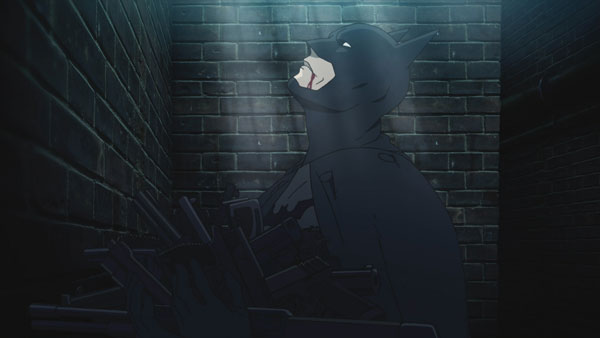
What really sold me on these vignettes is how they opt for a more intimate narrative beyond a typical superhero vs. villain structure. The focus is not particularly on the villains (which I’m sure angered a lot of fans), but rather on the qualities that make Batman who he is: powerful, resourceful, noble…human. Two of the stories that perfectly illustrate this theme are produced by Studio 4ºC: “Have I Got a Story For You” and “Working Through Pain” (which the above image is taken from). Unsurprisingly, these are my favorites from this collection. (On a side note: these 2 shorts have made me a Studio 4ºC convert.)

Each story has its own distinct visual style and the production quality is top-notch. There are intricate backgrounds and frenetic fight sequences galore. There is something special about each visual interpretation of Batman and his beloved Gotham City. I must admit, however, that if you’re not a fan of the anime style, you may not appreciate the work entirely.

I’m not going to bore you with the details, but if you are looking for some high quality animation or are a fan of any of the aforementioned studios, it deserves your attention. If you don’t like it, at least you get $3 off the movie concession stand if you purchase it from Best Buy.